How to Learn Pashto Online: What Actually Works in the First 90 Days
A realistic plan for your first three months — what to set up, what to practise, and what to ignore.
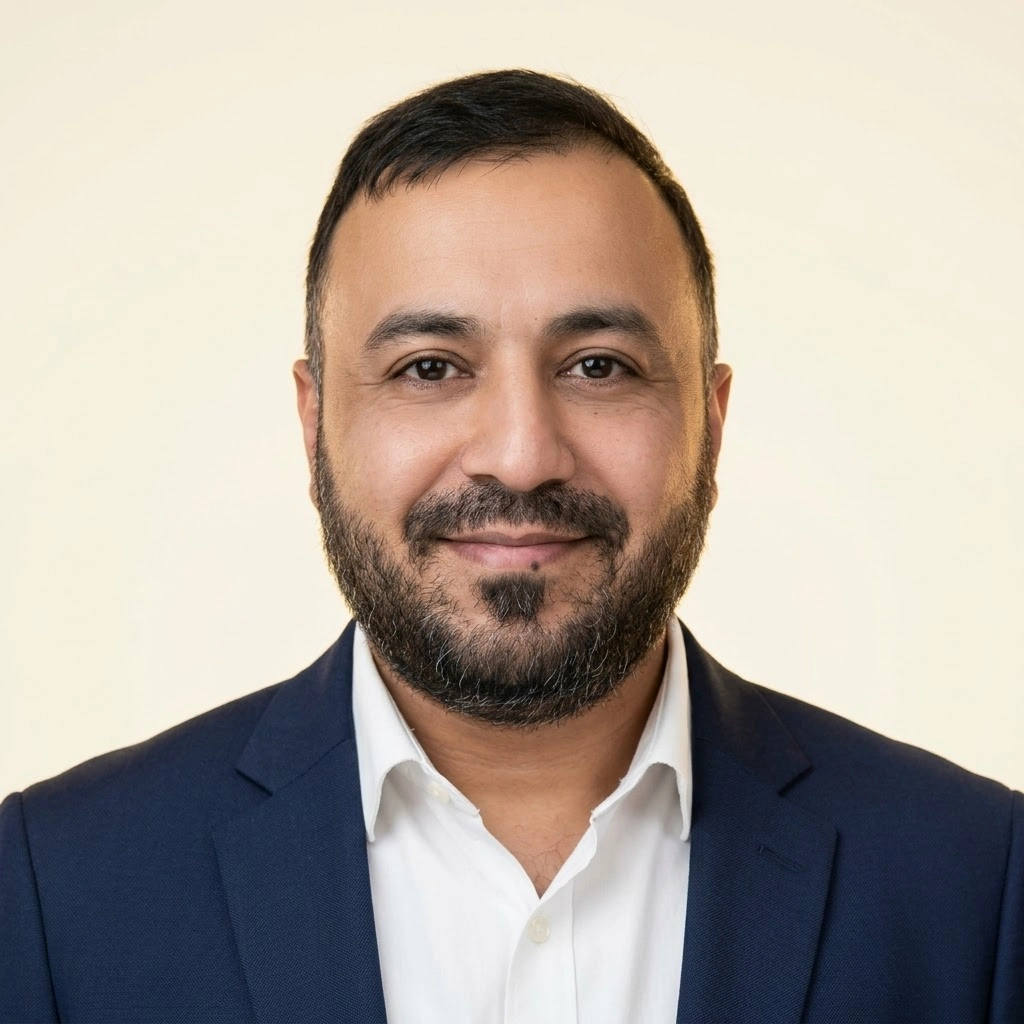 Includes Mohsin Ali’s voice
Pashto is not a language you can drift into. There is no big app course waiting for you, no shelf of beginner workbooks at the local bookshop, and very little structured material online for English speakers. That sounds like bad news. It isn’t — it just means the method matters more than the materials.
In 16 years I have taught more than a thousand people online, most of them starting from nothing. The ones still speaking Pashto a year later almost always did the same few things in their first three months. Here is what that looks like.
Start with one sentence you want to say
Before you book anything or download anything, finish this sentence: I want to be able to say ___ to ___.
I ask every new student this in their first lesson, and the answers are wonderfully specific. I want to greet my wife’s father properly. I want to talk to my grandmother on the phone without my mother translating. I want to order food in Peshawar without pointing. I want to understand what my colleagues are laughing about.
That one sentence does more work than any syllabus. It tells us which words you need first, which dialect fits, how formal you need to sound, and whether reading matters to you at all. A learner who wants to phone their grandmother needs completely different material from one preparing for a posting in Kandahar — and both get further than someone who just wants to learn Pashto in general.
Vague goals produce vague practice. One real sentence you want to say produces a plan.
What you actually need
Less than you think. Here is the honest list.
The whole kit: a phone or laptop, headphones, a quiet corner, a stable connection, and somewhere to keep notes. No textbook, no subscription, no app before your first lesson.
A live person, not just an app
This is the one part you cannot skip, and it is the reason apps stall with Pashto in particular. Pashto has sounds English does not — the retroflex ړ and ږ, the hard ق, vowel lengths that change meaning. You cannot hear whether you are making them correctly, and no app will tell you. A tutor hears it in the first thirty seconds and corrects it before the habit sets.
There is a second reason. Pashto has real dialect variation, and the way a sentence is said in Peshawar is not the way it is said in Kandahar. A book picks one for you silently. A tutor asks who you will be speaking to and teaches you that one. If you are weighing dialects, I have answered that properly on the Learning Pashto Q&A page.
A slot in your week, not a burst of enthusiasm
Pick two 30-minute slots a week and put them in your calendar like appointments, because that is what they are. Two short lessons beat one long one almost every time — you get two chances to be corrected, two resets, and half the chance of a week going by without any Pashto in it.
Ten minutes on the days in between
Not an hour. Ten minutes, out loud, on your own. This is where the lesson actually lands, and the plan below says exactly what to do with them.
The 90-day plan
Three months, three jobs. Each builds on the last, and none of them involves memorising grammar tables.
Days 1–30: speak before you read
The first month is entirely spoken, and it is built on sentence patterns rather than vocabulary. A pattern is a sentence with a gap in it — Za ___ ghwaṛam, I want ___ — and once you own the shape, every new word you learn has somewhere to go.
زه چای غواړم
Za chai ghwaṛam. I want tea.
Notice where the verb sits: at the end. Pashto puts the verb last, so I tea want is the natural order, not a quirk. Once you have seen that, most beginner sentences stop looking strange.
Five patterns carry a surprising amount of ordinary conversation, and I have written them all out with audio in the five sentence patterns. Your whole first month can sit inside those five. Your ten minutes on off-days is simply this: take one pattern, change only the middle word, say it aloud ten times.
By day 30 you should be able to introduce yourself, say where you are from, ask where something is, and say what you want — unprompted, without reading from anything.
Days 31–60: widen the patterns
Month two is about flexibility rather than more material. The same five shapes get stretched: past tense, questions, negatives, plurals, and the polite forms you need with an elder or a father-in-law.
This is also the month most people hit the wall where they know the words but freeze when it is their turn to speak. It is completely normal and it has specific fixes, which I wrote about in how to stop freezing mid-sentence. The short version: your mouth needs more rehearsal than your memory does.
Two small habits make month two work. First, start talking to yourself — narrate what you are doing while you cook or drive, in whatever broken Pashto you have. Second, use each new pattern on a real person within 24 hours of learning it, even badly.
A sentence you have said to a real person is worth twenty you have only read.
Days 61–90: add real input
In month three we stop keeping you in a protected bubble. You start listening to Pashto that was not made for learners — a news bulletin, a song, a drama, a YouTube channel, a relative on speakerphone.
It will feel too fast. That is expected, and it is not a sign you have failed. The job in month three is not to understand everything; it is to catch the patterns you already own inside the rush of a real sentence. Students are usually startled by how often one of their five shapes goes past.
By day 90 the shift that matters has happened: Pashto has stopped being a subject you study and become something you do, badly, every day. That is the state people go on learning from for years.
Four things that slow people down
I see the same four patterns in learners who stall, and not one of them is about talent.
Collecting words instead of sentences
Five hundred flashcards and nothing to put them in. Words are bricks; patterns are the wall. Learn a shape, then fill it.
Waiting until you are ready to speak
There is no point at which you become ready. You become able by speaking before you are ready, which is uncomfortable for about three weeks and then is not.
Starting with the alphabet out of duty
Many people begin with the script because it feels like the proper place to start, spend a month on letters, and still cannot say hello. The script is genuinely worth learning, but as a goal of its own rather than a gate in front of speaking. You can see the letters on the interactive Pashto alphabet whenever you are curious.
Long gaps
Three weeks off costs more than three weeks. Fifteen minutes in a bad week keeps the thread; nothing at all means starting again. On weeks when life is full, shrink the session instead of skipping it.
Should you learn the script?
Eventually, yes — but it answers a different question from speaking, and it belongs on its own timeline.
Spoken Pashto and written Pashto can be learned in parallel or separately. Plenty of my students speak comfortably for months using transliteration, then come to the script later with a real reason: they want to read messages from family, follow signs on a trip, read poetry, or read scripture. That reason makes the letters stick in a way that duty never does.
If reading is your actual goal — books, articles, scripture — then invert this whole article and start there. That is what the Pashto Reading course is for, and its first month looks completely different.
If you are coming to Pashto from Urdu, you have a head start worth knowing about: much of the alphabet is already familiar and the sentence order matches. I covered that in learning Pashto from Urdu.
Questions learners ask
How many online Pashto lessons a week do I need?
Two 30-minute lessons a week, with ten minutes of speaking practice on the days in between, moves most of my students faster than one long weekly lesson. Short and frequent beats long and rare, because speaking is a habit before it is knowledge.
Can I learn to speak Pashto online without learning the script?
Yes. Spoken Pashto and written Pashto can be learned separately, and many of my students speak comfortably using transliteration first. Learn the script when you want to read messages, signs, books or scripture, not because you think speaking requires it.
What do I need for an online Pashto lesson?
A phone or laptop, headphones, a quiet corner and a stable connection. Lessons run on Zoom, Google Meet or Microsoft Teams. You do not need a textbook, a subscription or any app before your first lesson.
If you want the first 90 days to start properly, the simplest step is a free trial lesson. We will find your one sentence, and you will say a real Pashto sentence before the half hour is up. You can see how the lessons are built on the Spoken Pashto course page.
WhatsApp